Thursday, 12th February of 2026
jueves, 12 de febrero de 2026
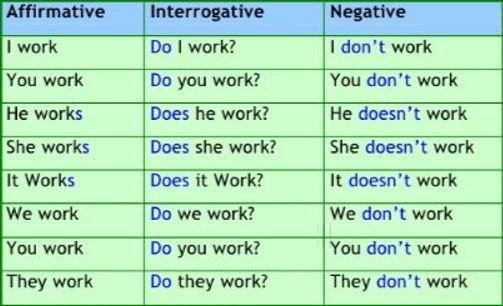
2. PRESENT SIMPLE (NEGATIVE AND INTERROGATIVE SENTENCES)
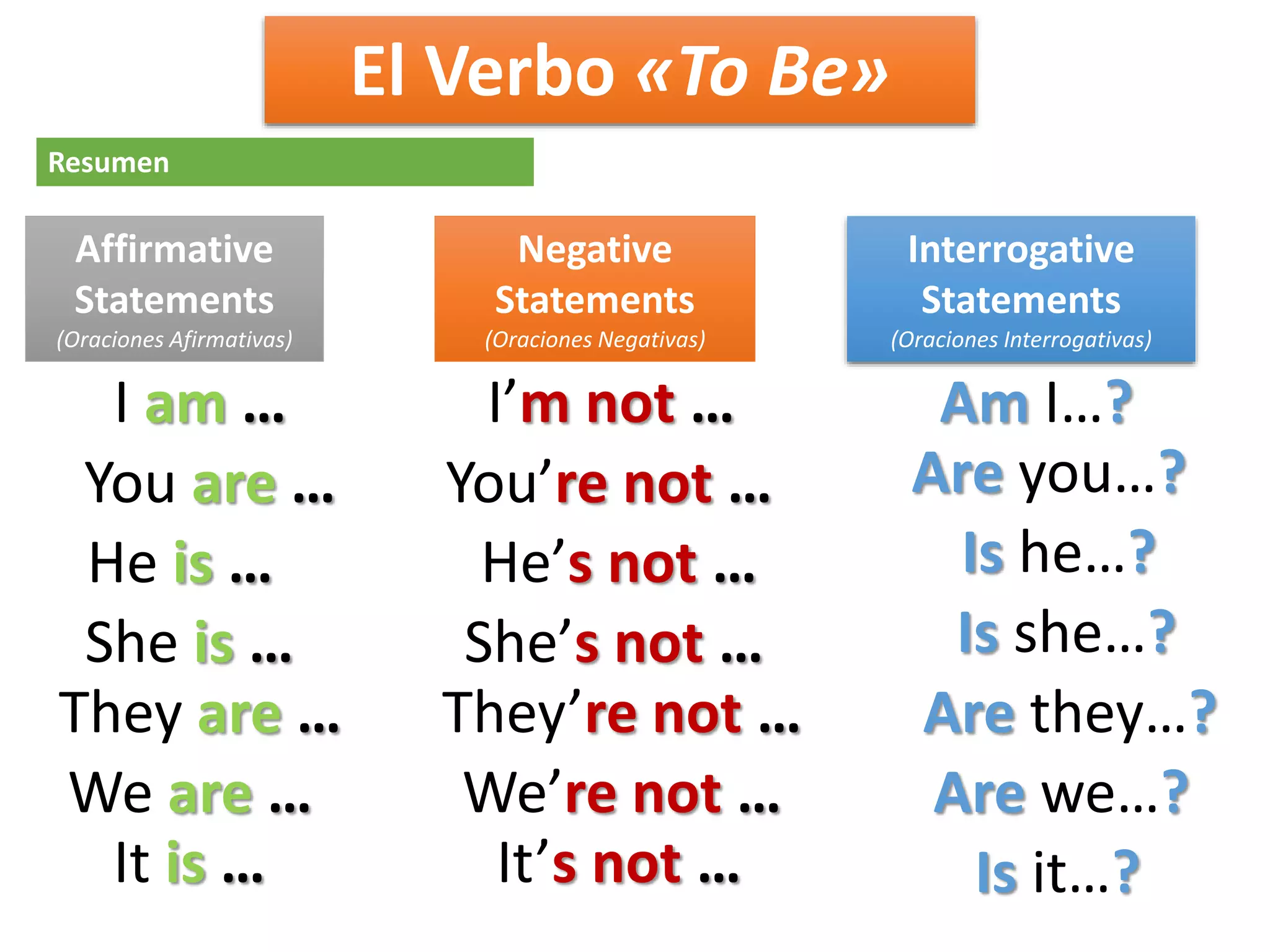
2. VER TO BE (NEGATIVE AND INTERROGATIVE SENTENCES)
Thursday, 12th February of 2026
Good morning my dear students, today we are going to learn about verb to be in negative and interrogative sentences
We are going to do the following work in class, in this homework we are going to review what we learned in class about verb to be
Then let´s play and practice the verb to be in positive, negative and interrogative sentences, in this game each student chooses a box, in each box contains a questions and three answers choices. The student must choose the correct answer
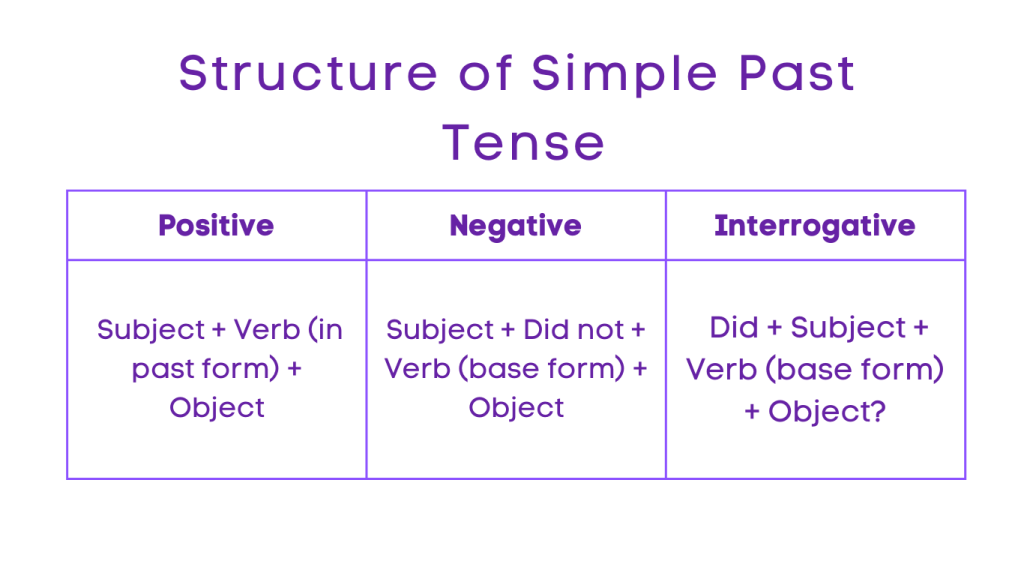
2. PAST SIMPLE (NEGATIVE AND INTERROGATIVE SENTENCES?
Thursday, 12th February of 2026
Good morning my dear students, today we are goint to learn about past simple in negative and interrogative sentences
We are going to do the following work in class, in this homework we are going to review what we learned in class about past simple
miércoles, 11 de febrero de 2026
2. LOS SALUDOS - THE GREETINGS - CONTINUACIÓN.
viernes, 6 de febrero de 2026
1. VERB TO BE
Friday, 06th February of 2026
Good morning my dear students, today we are goint to learn about verb to be
When building a sentence in English, a verb is always required. The verb “be” is the most important verb to learn in English. ‘’TO BE’’ is used to describe objects, features, locations, etc.
The verb ‘’ TO BE ‘’has three forms in the present; am, is and are;
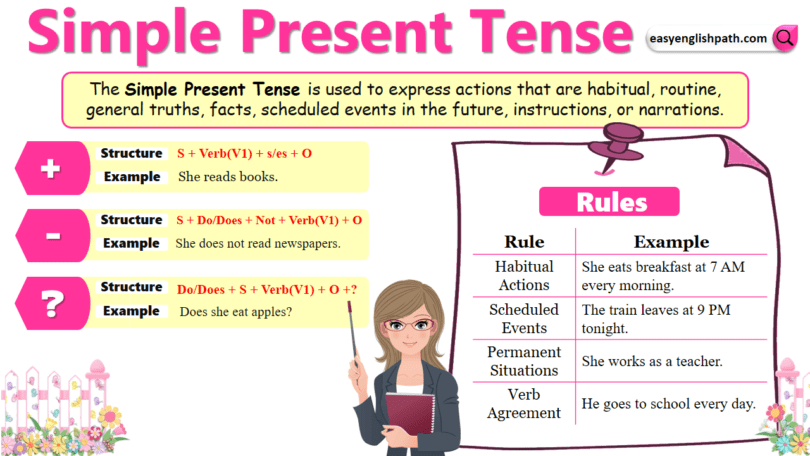
1. PRESENT SIMPLE
Friday, 06th February of 2026
Good morning my dear students, today we are goint to learn about present simple
The spelling for the verb in the third person differs depending on the ending of that verb.
In general, in the third person we add 'S' in the third person.
1. For verbs that end in -O, -CH, -SH, -SS, -X, or -Z we add -ES in the third person.
- go – goes
- catch – catches
- wash – washes
- kiss – kisses
- fix – fixes
- buzz – buzzes
- marry – marries
- study – studies
- carry – carries
- worry – worries
- play – plays
- enjoy – enjoys
- say – says
In your notebook should be write a daily routine using present simple to socialize in the next class
1. PAST SIMPLE
Friday, 06th February of 2026
Good morning my dear students, today we are goint to learn about past simple
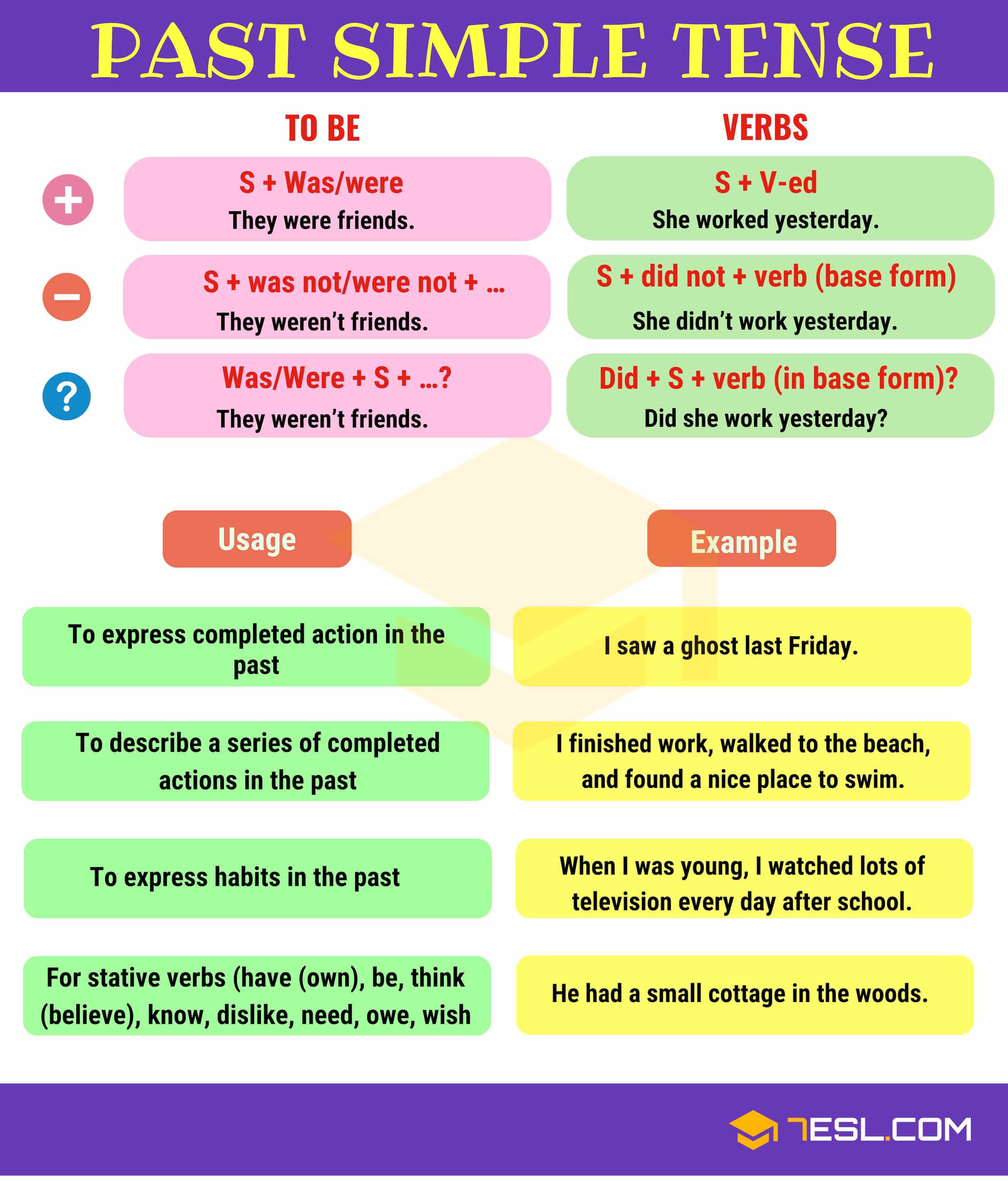
The past simple tense describes actions that happened and were completed in the past. It shows that something is finished and no longer happening.
Forming the past simple tense is generally simple. For regular verbs, add -ed to the base form. For example:
- play → played
- walk → walked
Irregular verbs do not follow this rule. Their forms must be memorized. Some examples include:
- go → went
- eat → ate
The past simple tense is often used with specific time markers. Common time indicators include:
- yesterday
- last week
- in 2020