Thursday, 05 March of 2026

Hello my dears students, today we are going to learn about present continuous

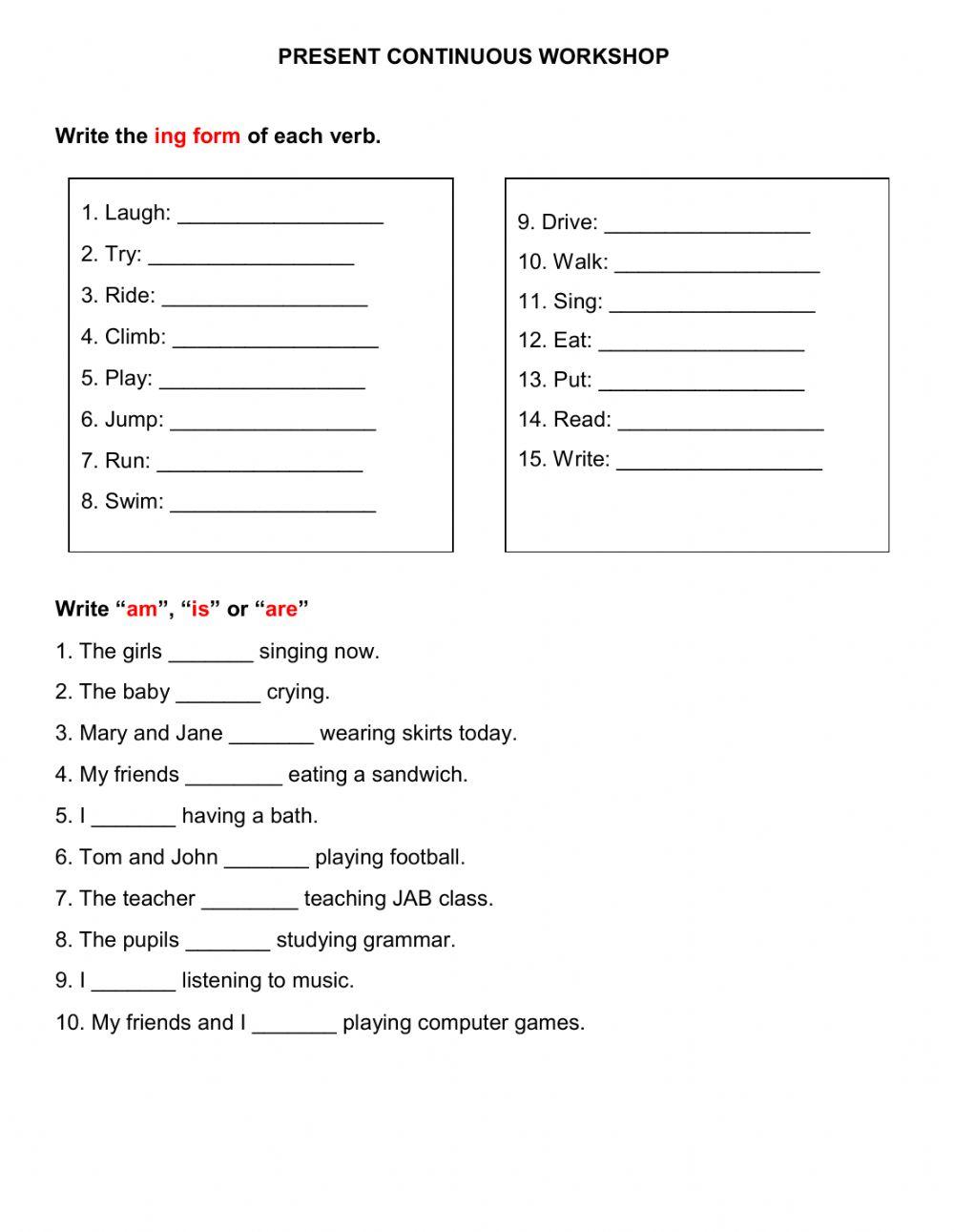
The present continuous tense expresses actions happening right now, temporary situations, or future plans, formed by subject + be (am/is/are) + verb-ing. It is used for immediate actions ("She is reading"), ongoing trends ("People are changing"), and fixed arrangements ("We're meeting tomorrow").
Key Grammar Rules & Structures
- Positive: Subject + am/is/are + verb-ing (e.g., I am working).
- Negative: Subject + am/is/are + not + verb-ing (e.g., She is not eating).
- Question: Am/Is/Are + subject + verb-ing? (e.g., Are they coming?).
- Spelling Rules for -ing:
- Most verbs: Add -ing (e.g., work working).
- Verbs ending in -e: Drop -e, add -ing (e.g., write writing).
- Verbs ending consonant-vowel-consonant: Double final consonant, add -ing (e.g., sit sitting)

- Usage Scenarios
- Actions happening now: "I'm watching TV".
- Temporary situations/trends: "I'm staying with a friend this week".
- Definite future plans: "We're flying to Paris on Monday".
- Repetitive actions (with "always/constantly"): "They are always complaining".
- Common Mistakes & Notes
- Stative Verbs: Generally, state verbs (e.g., know, understand, love, believe, need) are not used in continuous forms (e.g., say "I know," not "I am knowing").
- Contractions: In conversation, contractions are common (e.g., I'm, you're, he's, she's, we're, they're)